Dry Branch, GA · Bibb County
Basement Water Damage Restoration in Dry Branch, GAEmergency Basement Flood Cleanup & Basement Wall Drying
Basement Water Damage Restoration in Dry Branch runs from basement water extraction and basement floor water removal to basement dehumidification.
Answered 24/7
Local Basement Water Damage Restoration Near Dry Branch
Water in a basement does not stay on the floor. It wicks up drywall, soaks insulation and seeps into wood framing. In Dry Branch, a few inches of water can damage walls up to two feet high.
Homeowners in Dry Branch can call (478) 779-1453 day or night when water is rising in the basement. Service also covers Franklinton, Griswoldville and Huber, with the same pumping and drying steps.
Complete Basement Water Damage Restoration for Dry Branch
Emergency Basement Flood Cleanup
Emergency cleanup starts with stopping the source where possible, checking for electrical hazards and pumping out the water.
Basement Wall Drying
Finished basement walls hide wet insulation and framing. Removing the bottom of the drywall lets air reach the cavity.
Basement Water Extraction
Basement water is removed before drying starts, because every gallon left behind keeps the walls and air damp.
Basement Sewer Backup Cleanup
After a sewer backup, cleanup and disinfection come before drying, so contaminated surfaces are not left in place.
Basement Drying Services
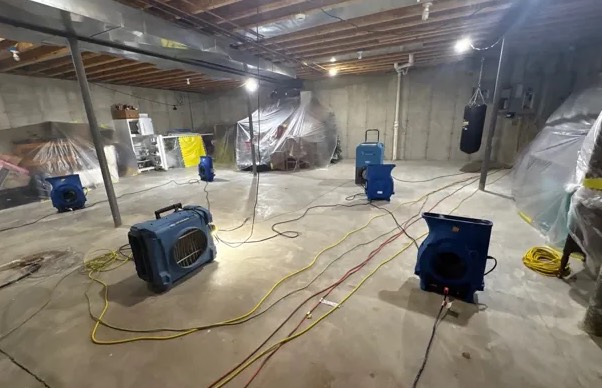
Air movers and dehumidifiers are placed to dry walls, framing and the slab. Below-grade rooms dry slowly, so readings are taken daily.
How to Know You Need Basement Water Damage Restoration in Dry Branch
Mold on Surfaces
Dark spots on drywall, framing or stored boxes mean the area has stayed wet for days.
Condensation on Windows or Pipes
Water beading on cold pipes or basement windows shows high humidity that keeps materials damp.
Rusted Appliances or Pipes
Rust on the water heater, furnace base or pipes points to repeated moisture or past flooding.
Sump Pump Failure or Overflow
A sump pump that runs constantly, fails to start or lets the pit overflow puts the basement at risk.
How Basement Water Damage Restoration Works in Dry Branch
Step 1: Initial Assessment and Water Removal
The source and type of water are identified, and standing water is removed right away.
Step 2: Focused Drying of Materials
Walls, framing and the slab are dried with directed airflow, with wet insulation removed.
Step 3: Air Quality Management
Air scrubbers filter dust and odors from removal work while drying continues.
Step 4: Documentation for Restoration
Photos, readings and a list of removed materials are prepared for insurance and rebuilding.
What Causes Basement Water Damage Restoration in Dry Branch
Stormwater Runoff Into Lower Levels
Heavy rain running off hard ground or a sloped yard can pour down stairwells and under doors into below-grade rooms.
Window Well Flooding
Window wells without drains or covers fill with rain and leak through basement windows.
High Water Table and Hydrostatic Pressure
A high water table pushes groundwater up through the slab and into the joints between wall and floor.
Sewer Line Backups
A blocked or overloaded sewer line pushes wastewater up through basement drains and toilets.
Basement Water Damage Restoration for All Properties in Dry Branch
Residential Basement Water Damage Restoration
In homes, a flooded basement often means damaged carpet, drywall, a furnace or water heater and stored belongings. Water is pumped out, contents are moved and the space is dried.
Commercial Basement Water Damage Restoration
In commercial buildings, basements hold mechanical rooms, storage and sometimes offices. Water is removed and equipment areas are dried so systems can be checked and restarted.
Basement Water Damage Restoration: Professional Help vs. Doing It Yourself in Dry Branch
Keeping gutters and downspouts clear and checking water heater and washer hoses are good DIY steps before storm season. Once water is on the floor, call (478) 779-1453.
Basement Water Damage Restoration Cost in Dry Branch, GA
Before pricing basement water damage restoration in Dry Branch, the pros check the water depth, the type of water and what the basement is finished with.
Access Complexity
Narrow stairs, low ceilings and stored contents can make the work slower.
Emergency Service
Night, weekend and storm calls can cost more than a scheduled visit.
Secondary Damage
Damage to furnaces, water heaters and belongings adds repair and replacement costs.
Does Insurance Cover Basement Water Damage Restoration?
Flood damage from rising outside water usually needs flood insurance. Water from inside the home, like a broken pipe, is more often covered.
Benefits of Local Pros for Basement Water Damage Restoration in Dry Branch
Industry Drying Standards
Drying follows industry water damage standards, with readings taken at every visit.
Advanced Moisture Detection
Moisture meters and thermal cameras find water in walls and slabs that looks dry.
Detailed Documentation
Photos, readings and drying logs are kept to support your insurance claim.
Emergency Basement Water Damage Restoration Available in Dry Branch
A flooded basement damages walls, furnaces, water heaters and belongings quickly. Call (478) 779-1453 for basement water damage restoration in Dry Branch at any hour.
Call Now (478) 779-1453Regions Served for Basement Water Damage Restoration Near Dry Branch
Nearby areas served for basement water damage restoration include Franklinton, Griswoldville and Huber, with the same pumping and drying steps used in Dry Branch.
- Basement Water Damage Restoration in Franklinton
- Basement Water Damage Restoration in Griswoldville
- Basement Water Damage Restoration in Huber
- Basement Water Damage Restoration in Macon
- Basement Water Damage Restoration in Rutland
- Basement Water Damage Restoration in Jeffersonville
- Basement Water Damage Restoration in Avondale
- Basement Water Damage Restoration in Sofkee
- Emergency Damage Restoration in 31020
- Storm Damage Restoration in 31020
- Water Damage Restoration in 31020
- Water Extraction Service in 31020
- Water Leak Detection in 31020
- Water Removal Service in 31020
FAQ for Basement Water Damage Restoration in Dry Branch
Does basement mold prevention need special steps after flooding?
Fast drying is the main step. Wood and concrete that stayed wet can be treated with an antimicrobial once dry.
What is involved in basement water damage restoration?
Pumping out water, removing soaked materials, cleaning contaminated areas, drying walls, framing and concrete, and dehumidifying until readings are normal.
Why is quick action important for below-grade flood restoration?
Basements dry slowly, so every hour of standing water adds days of drying and more material to replace.
Why is dehumidification so important after basement water removal?
Basements hold moisture in the air and concrete. Without dehumidifiers, walls and framing stay damp long after the water is gone.
How is basement restoration documented for insurance?
With photos of the water level and damage, moisture readings, a list of removed materials and daily drying logs.