Junction City, GA · Talbot County
Roof Leak Water Removal in Junction City, GAEmergency Roof Tarping & Attic Water Extraction
Roof Leak Water Removal in Junction City starts with emergency roof tarping and attic water extraction, then moves to wet insulation removal and structural drying services.
Answered 24/7
Help With Roof Leak Water Damage in Junction City
Water from a roof leak lands on the ceiling first. Drywall can hold only so much before it sags, so getting water out of the attic quickly protects the room below.
Roof leak water removal is available in Junction City and nearby Geneva, Talbotton and Butler. The pros tarp the opening if needed, extract the water and dry the attic framing and ceiling drywall.
Roof Leak Cleanup Services in Junction City, GA
Emergency Roof Tarping
When shingles are torn or a branch has punched a hole, the pros cover the opening with a weighted or battened tarp before they start drying the attic.
Attic Water Extraction
In Junction City homes with low attics, extraction is done with compact equipment that fits between joists and over ceiling drywall without stepping through it.
Ceiling Water Damage Cleanup
Stained or sagging drywall is checked with a moisture meter. Sections that are soft or bowed are cut out so the cavity above can dry and the ceiling can be patched.
Leak Source Identification
Water often travels along rafters before it drips, so the stain is rarely under the hole. Tracing it in the attic shows the real entry point.
Wet Insulation Removal
Wet insulation loses its value and flattens. Removing it exposes the ceiling drywall and joists so air movers and dehumidifiers can reach them.
Signs You Need Roof Leak Water Removal
Dark Spots on Attic Wood
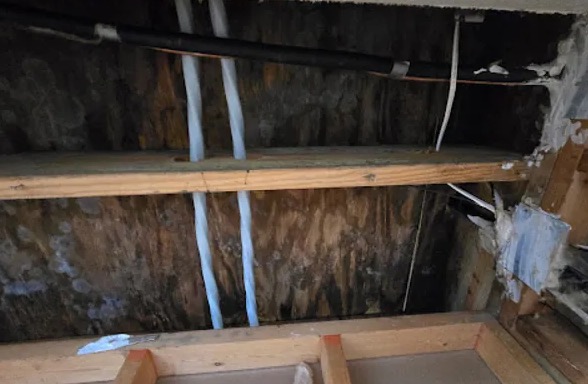
Dark streaks or spots on rafters and roof decking show where water has been running or sitting for a while.
Dripping From a Light Fixture
Water dripping from a light or ceiling fan means it has pooled above the ceiling. Turn off that circuit and keep people clear.
Peeling Paint on Upper Walls
Bubbling or peeling paint near the ceiling line on exterior walls points to water running down inside the wall.
Wet or Flattened Insulation
Insulation that is matted, stained or damp to the touch in the attic means rain is getting past the roof deck.
How Roof Leak Water Removal Works in Junction City
Step 1: Assess the Leak
The pros look at the roof, attic and ceilings to see how long the leak has been running and what it has soaked.
Step 2: Remove Water and Debris
Water, wet insulation and fallen drywall are cleared out so the attic and room below can dry evenly.
Step 3: Clean Wet Surfaces
Wood and drywall that stayed wet for a day or more are cleaned and treated before drying to limit odor and mold.
Step 4: Monitor Until Dry
Readings are taken on each visit and the equipment is moved as areas dry, until every wet spot reaches its target.
Why Water Gets Into the Attic in Junction City
Storm Debris and Hail
Falling branches and hail can crack shingles or puncture the deck, opening a direct path for rain into the attic.
Clogged Gutters
Leaves and debris in gutters make water back up at the roof edge, where it seeps under shingles and into the soffit and walls.
Aging Roofing Materials
As shingles age they curl, lose granules and crack, and slow leaks start where the roof covering has worn thin.
Cracked Vent Boots
The rubber collars around plumbing vents dry out and split with age, letting rain drip down the pipe into the attic.
Roof Leak Water Removal for Every Property in Junction City, GA
Residential Roof Leak Water Removal
In older Junction City homes, leaks often follow old chimney chases or plaster ceilings. The pros check these areas closely because plaster holds water longer than drywall.
Commercial Roof Leak Water Removal
Warehouses and shops with large roof areas can have several leaks at once. The pros map each wet area, extract water and dry the structure section by section.
DIY Steps and Their Limits After a Roof Leak in Junction City
Fans and a household dehumidifier help a damp room, but they rarely dry an attic or a soaked ceiling. Wet insulation needs to come out first.
Pricing Roof Leak Water Removal in Junction City
Leaks found early cost less to clean up. Water that sat for a long time can mean more drywall and insulation to replace and longer drying.
Insulation Removal
Bagging and hauling soaked insulation takes labor, and the attic needs new insulation once the framing is dry.
Attic Access
Low, tight attics with little floor to stand on take longer to work in than open attics with a walkway.
How Long It Leaked
A leak caught during the first storm usually means less wet material than one that has been dripping into the attic for weeks.
Does Insurance Cover Roof Leak Water Removal?
The pros keep photos, moisture maps and a list of removed materials. You file the claim with your insurer and share these records with the adjuster.
Why Roof Leaks Need Professional Drying in Junction City
Finding Hidden Water
Thermal cameras and moisture meters find wet insulation and wall cavities that are not visible from the room below.
Notes for the Roofer
The entry point and the path the water took are documented so the roofer knows exactly where to look.
Drying to Measured Targets
Drying stops only when meters show the wood and drywall are dry, not when the surface looks dry.
24/7 Emergency Roof Leak Water Removal in Junction City
Do not wait for a dry day to deal with a roof leak. Call (478) 779-1453 24/7 to stop the water and start drying the attic and ceilings.
Call Now (478) 779-1453Local Roof Leak Water Removal Coverage for Junction City
Other places served are listed below, each with its own page.
- Roof Leak Water Removal in Geneva
- Roof Leak Water Removal in Talbotton
- Roof Leak Water Removal in Butler
- Roof Leak Water Removal in Manchester
- Roof Leak Water Removal in Thomaston
- Roof Leak Water Removal in Reynolds
- Roof Leak Water Removal in Ideal
- Roof Leak Water Removal in Roberta
- Emergency Damage Restoration in 31812
- Storm Damage Restoration in 31812
- Water Damage Restoration in 31812
- Water Extraction Service in 31812
- Water Leak Detection in 31812
- Water Removal Service in 31812
Common Questions After a Roof Leak
What happens after the water is removed?
Drying equipment runs and the pros take readings until the attic and ceiling are dry. Then the roofer and drywall repairs can go ahead.
How long does it take to dry an attic after a roof leak?
Drying usually takes three to five days, depending on how wet the wood is and how much insulation came out. Readings decide when it is done.
Does a stained ceiling always need to be replaced?
No. If moisture readings show the drywall is firm and dries out, it can often stay and be primed and painted. Soft or sagging sections are replaced.
Does every roof leak lead to mold?
No. Mold needs materials to stay wet for a day or more. When water is removed and the attic is dried promptly, mold usually does not take hold.
Are old ceiling stains a sign of an active leak?
Not always. A dry stain may be from a past leak. A stain that is damp, growing or bulging means water is still getting in.