Rutland, GA · Bibb County
Basement Water Removal in Rutland, GABasement Floor Water Damage & Basement Moisture Inspection
Basement Water Removal in Rutland includes basement water pump out, basement drying services and basement moisture inspection.
Answered 24/7
Expert Basement Water Removal in Rutland, Sofkee, Walden and Avondale
Basement Water Removal in Rutland protects more than the floor. Furnaces, water heaters, washers and stored belongings in the basement can all be damaged by standing water.
In Rutland, when a basement or below-grade room takes on water, it usually follows heavy rain, a sewer backup or a burst pipe. Local basement water removal pros serve Rutland, Sofkee, Walden and Avondale, pumping water out and drying the space.
Professional Basement Water Removal Offerings
Basement Floor Water Damage
Water on a basement floor soaks into carpet pad, laminate seams and the concrete itself. Floor coverings are lifted where needed so the slab can dry.
Basement Moisture Inspection
An inspection shows how high water wicked up the walls and how far it spread under flooring, which sets the drying plan.
Basement Drying Services
Drying plans for basements account for cool air and thick concrete, which hold moisture longer than upper floors.
Basement Dehumidification
After drying, a household dehumidifier may still be needed to keep basement humidity in a healthy range.
Sump Pump Failure Water Cleanup
Cleanup after a sump failure includes drying the area around the pit and noting whether the pump, switch or power was the cause.
Indicators You Need Professional Water Removal
Sump Pump Failure or Overflow
A sump pit that is full, overflowing or has a pump that will not start means water is about to spread.
Warped or Buckling Flooring
Flooring that buckles, lifts or feels spongy has water trapped between it and the slab.
Soggy or Wet Carpeting
Carpet that feels damp or smells sour is holding water in the pad against the concrete.
Efflorescence on Concrete Walls
White, powdery deposits on concrete walls mean water is passing through the masonry.
How Basement Water Removal Works in Rutland
Step 1: Emergency Water Extraction
Power is made safe, then pumps and extractors remove standing water from the basement floor.
Step 2: Detailed Moisture Inspection
Meters map wet walls, framing and slab areas, including behind finished walls and under flooring.
Step 3: Drying and Dehumidification
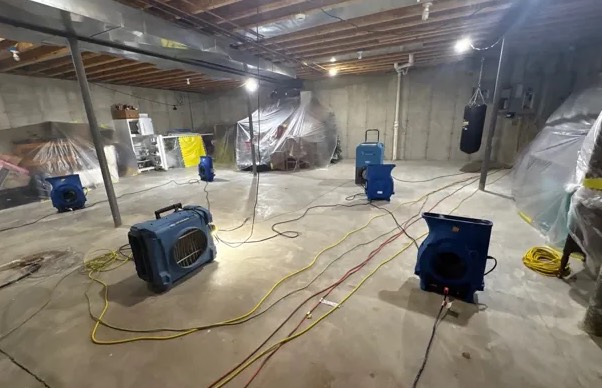
Air movers and large dehumidifiers run continuously, with readings checked every day.
Step 4: Final Verification and Monitoring
Readings are compared to dry areas, and equipment is removed only when the basement tests dry.
What Causes Water Damage in Basements
Appliance Malfunctions and Overflows
Washers, utility sinks and water softeners in the basement can overflow or leak.
Plumbing Leaks or Pipe Bursts
Supply lines, drain pipes and water heaters in the basement can leak or burst onto the floor.
Sump Pump Malfunction or Power Loss
A sump pump that fails mechanically or loses power during a storm lets groundwater rise.
High Water Table and Hydrostatic Pressure
A high water table presses groundwater against the slab and walls, forcing it inside.
Basement Water Removal for Homes and Businesses
Residential Basement Water Removal
Finished basements used as bedrooms or family rooms need careful moisture checks behind walls and under flooring, since that is where water hides.
Commercial Basement Water Removal
Businesses with below-grade storage need wet inventory moved out and documented. Drying is planned around daily operations wherever possible.
Why DIY Basement Water Removal Often Fails in Rutland
Do not step into basement water if cords, outlets or appliances are in it. Shut off power at the panel only if you can reach it from a dry spot, then call (478) 779-1453.
Factors Affecting Basement Water Removal Cost
The cost of basement water removal in Rutland depends on how deep the water is, what type of water it is and how much finished material has to come out.
Basement Square Footage
Larger basements need more extraction, more drying equipment and more days of drying.
Additional Services
Antimicrobial treatment, contents cleaning and repairs after drying add to the cost.
Affected Materials
Finished walls, carpet and laminate take more removal work than bare concrete.
Does Insurance Cover Basement Water Removal?
Coverage for basement water removal depends on the water source and your policy. The pros document the damage and drying, and your insurer decides what is covered.
Why Rutland Homeowners Trust Local Pros for Basement Water Removal
Detailed Damage Documentation
Photos, readings and drying logs are kept to support your insurance claim.
Clear Communication
You get plain updates on what was found, what was removed and how drying is going.
Methodical Water Removal Process
Water is removed in a set order: pump-out, extraction, removal of soaked materials, then drying.
24/7 Emergency Basement Water Removal in Rutland
The faster a basement is pumped out, the more can be saved. Call (478) 779-1453 for basement water removal in Rutland as soon as you see water.
Call Now (478) 779-1453Communities Served for Basement Water Removal
Each place listed below has its own page with local details.
Basement Water Removal in Rutland: Your Questions
Is a sump pump failure an emergency?
Yes, especially during rain. Groundwater can rise quickly once the pump stops, flooding the floor and finished rooms.
How long does basement drying take?
Often several days or longer, because concrete and cool basement air hold moisture. Daily readings show when it is done.
Why is fast water removal so important for basements?
Basements dry slowly, so every hour of standing water adds drying days and more materials to replace.
What equipment is used for basement water extraction?
Submersible pumps, extractors, wet vacs, air movers, large dehumidifiers and moisture meters to confirm drying.
What is involved in basement leak cleanup?
Stopping the leak, extracting the water, drying the floor and walls and checking for hidden moisture under flooring.