Forsyth, GA · Monroe County
Basement Water Removal in Forsyth, GABasement Floor Water Damage & Basement Drying Services
After a burst pipe or storm, Basement Water Removal in Forsyth means basement water pump out, basement wall drying and basement drying services.
Answered 24/7
Expert Basement Water Removal in Forsyth, Smarr, Juliette and Bolingbroke
Basement Water Removal in Forsyth starts with safety. Water near the furnace, water heater or electrical panel can be dangerous, so power is made safe before anyone steps into it.
A finished basement or lower level in Forsyth or Smarr, Juliette and Bolingbroke can hide water under flooring and behind drywall. The pros find and remove it before it causes lasting damage.
The Basement Water Removal Process in Forsyth
Basement Floor Water Damage
Water on a basement floor soaks into carpet pad, laminate seams and the concrete itself. Floor coverings are lifted where needed so the slab can dry.
Basement Drying Services
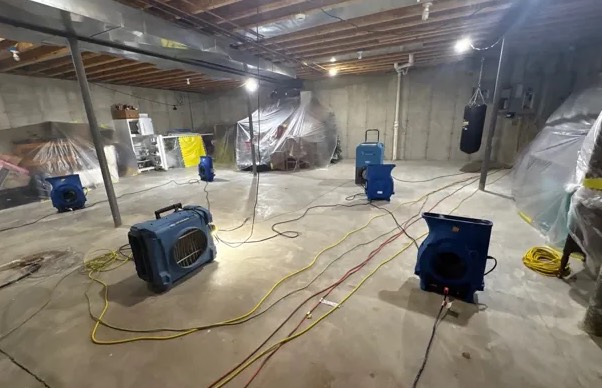
After pumping, air movers and dehumidifiers dry the walls, framing and slab. Readings are taken daily until every surface is back to normal.
Basement Moisture Inspection
Moisture meters and thermal cameras check walls, floors and the slab for water that is not visible, including behind finished walls.
Basement Dehumidification
Large dehumidifiers pull moisture from basement air, which lets walls, framing and the slab release the water they absorbed.
Basement Wall Drying
Concrete and block walls dry with directed airflow and dehumidification, which pull water out of the masonry.
Common Symptoms Requiring Basement Water Removal
Efflorescence on Concrete Walls
White, powdery deposits on concrete walls mean water is passing through the masonry.
Gurgling Sounds From Drains
Gurgling floor drains or slow drains can be an early sign of a sewer line problem.
Standing Water in Basement
Standing water anywhere on the basement floor needs to be pumped out before it soaks the walls.
Warped or Buckling Flooring
Flooring that buckles, lifts or feels spongy has water trapped between it and the slab.
How Basement Water Removal Works in Forsyth
Step 1: Safety Assessment and Pump Out
Electrical hazards are checked, then deep water is pumped outside away from the foundation.
Step 2: Content Removal and Damage Documentation
Wet belongings are moved, and photos record the water level and damaged materials.
Step 3: Targeted Water Removal and Drying
Carpet is extracted, wet drywall is cut back and air is aimed at walls and the slab.
Step 4: Sanitization and Moisture Control
Surfaces touched by dirty water are disinfected, and dehumidifiers keep humidity low.
Sources of Basement Water Problems
Window Well Leaks and Drainage
Window wells without drains or covers fill with rain and leak through the windows.
High Water Table and Hydrostatic Pressure
A high water table presses groundwater against the slab and walls, forcing it inside.
Heavy Rainfall and Storm Flooding
Heavy rain saturates the soil and pushes water through walls, cracks and the floor joint.
Sump Pump Malfunction or Power Loss
A sump pump that fails mechanically or loses power during a storm lets groundwater rise.
House and Business Basement Water Removal in Forsyth
Residential Basement Water Removal
Older homes with a basement may see seepage with every heavy storm. Water removal handles the current damage, and the entry point is noted for a waterproofing contractor.
Commercial Basement Water Removal
Multi-unit buildings with shared basements need each storage and laundry area pumped, dried and documented for the property manager.
Professional Basement Water Removal Versus Do-It-Yourself
You can move belongings up off the floor and run the dehumidifier you already own. Drying soaked walls and slab needs larger equipment and readings to confirm the job is done.
Factors Affecting Basement Water Removal Cost
The pros look at water depth, water type and basement finishes before pricing basement water removal in Forsyth, then explain the scope.
Access and Complexity
Narrow stairs, low ceilings and crowded storage areas make the work slower and longer.
Affected Materials
Finished walls, carpet and laminate take more removal work than bare concrete.
Water Depth and Volume
Deeper water takes more pumping time and usually means more materials got wet.
Does Insurance Cover Basement Water Removal?
Ask your adjuster early how your policy treats seepage and sewer backups, since many policies limit or exclude both kinds of water.
Advantages of Local Basement Water Removal Experts
24/7 Emergency Response
Help is available day or night when water is rising in the basement.
Methodical Water Removal Process
Water is removed in a set order: pump-out, extraction, removal of soaked materials, then drying.
Detailed Damage Documentation
Photos, readings and drying logs are kept to support your insurance claim.
Round-the-Clock Basement Water Removal for Forsyth
Storm night, weekend or holiday, local water damage pros handle basement water in Forsyth. Call (478) 779-1453 to get pumps running and drying started.
Call Now (478) 779-1453Communities Served for Basement Water Removal
Help with basement water removal is also available in communities near Forsyth, including Smarr, Juliette and Bolingbroke, for flooded basements and sewer backups.
- Basement Water Removal in Smarr
- Basement Water Removal in Juliette
- Basement Water Removal in Bolingbroke
- Basement Water Removal in Barnesville
- Basement Water Removal in Yatesville
- Basement Water Removal in Culloden
- Basement Water Removal in Milner
- Basement Water Removal in Jackson
- Emergency Damage Restoration in 31029
- Storm Damage Restoration in 31029
- Water Damage Restoration in 31029
- Water Extraction Service in 31029
- Water Leak Detection in 31029
- Water Removal Service in 31029
Frequently Asked Basement Water Removal Questions
Why is fast water removal so important for basements?
Basements dry slowly, so every hour of standing water adds drying days and more materials to replace.
Does basement flood cleanup include mold prevention?
Fast drying is the main prevention. Wood and concrete that stayed wet can be treated with an antimicrobial once dry.
How long does basement drying take?
Often several days or longer, because concrete and cool basement air hold moisture. Daily readings show when it is done.
What equipment is used for basement water extraction?
Submersible pumps, extractors, wet vacs, air movers, large dehumidifiers and moisture meters to confirm drying.
What causes basement floor water damage?
Storm seepage, burst pipes, appliance leaks, foundation cracks and sewer backups through floor drains are the usual sources.